V488 Per - No Evidence for Companions Despite Evidence of Dust: Sankar et al. 2021
In this study, I investigate the planetary system around V488 Per, the dustiest known main sequence star, to better understand the nature and origin of its extreme infrared excess. Far-infrared observations confirm a cold, outer dust belt, while mid-infrared spectroscopy reveals an unusually featureless warm dust component (~800 K)—unlike other debris disks, which typically show solid-state emission features (SED shown below).
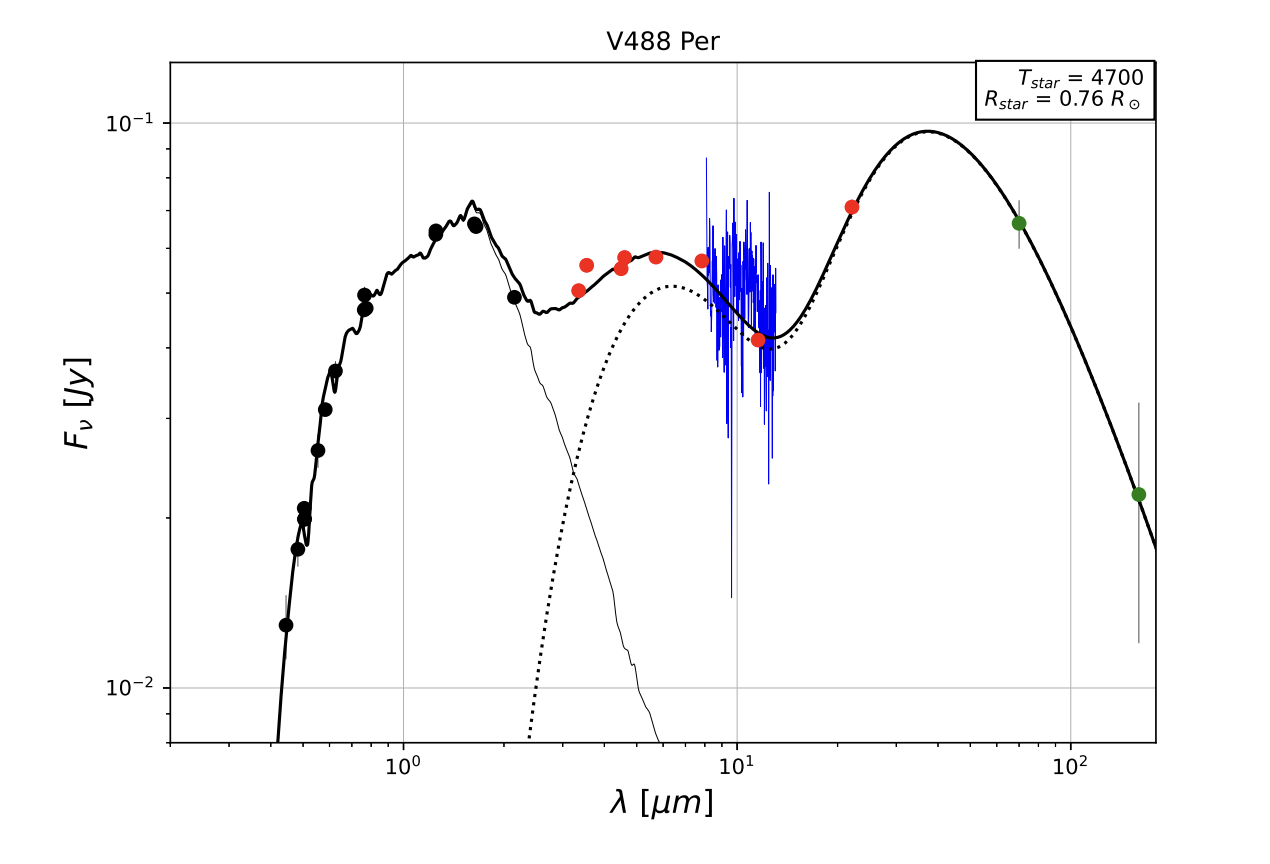
This suggests either large dust grains or exotic compositions like amorphous carbon or metallic iron, potentially pointing to the formation of a Mercury-like planet.
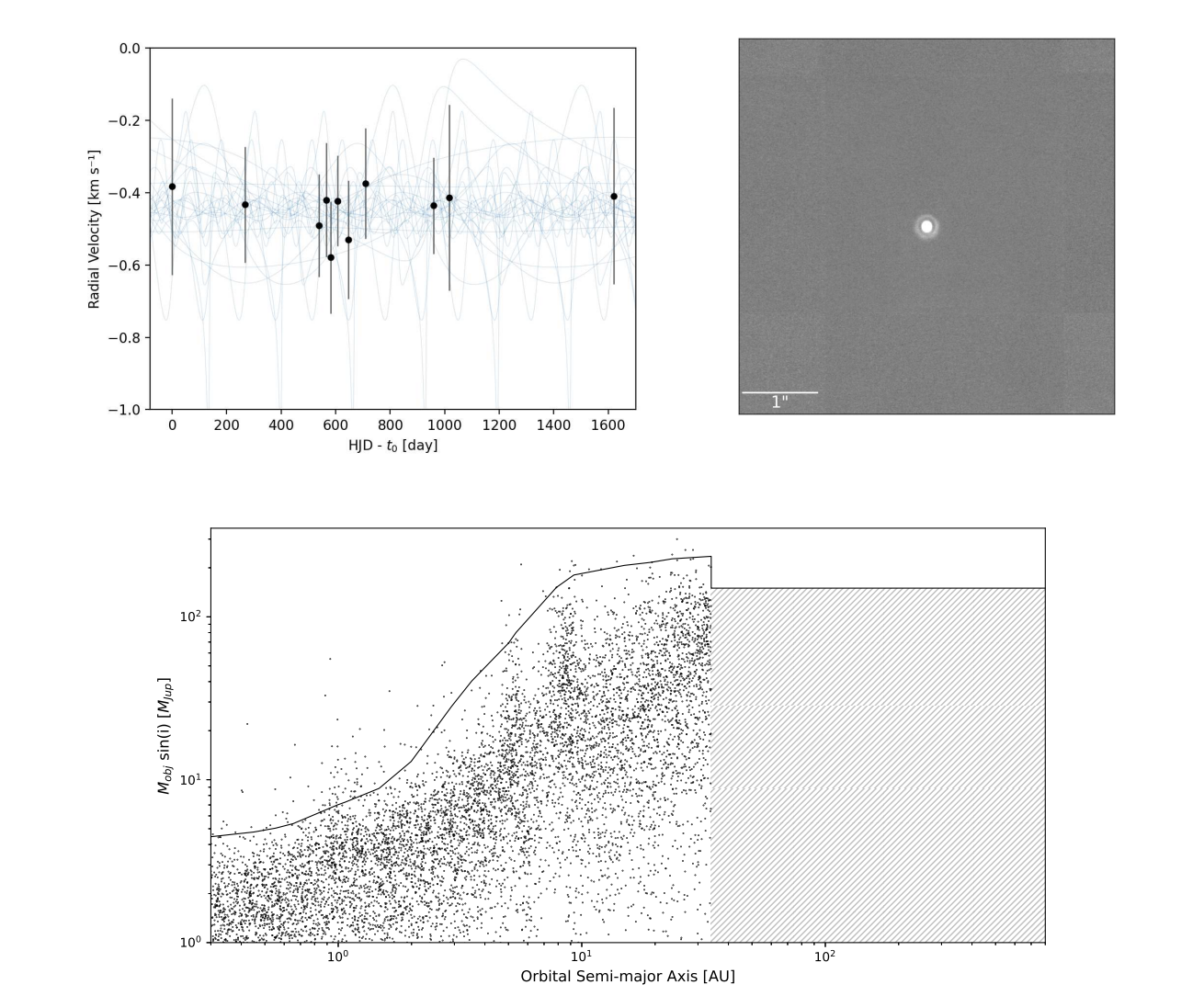
Additionally, high-resolution imaging (top right) and radial velocity monitoring (top left) detect no stellar or sub-stellar companions, ruling out external sources for the dust. These results make V488 Per a uniquely informative system for studying planet formation and inner planetary system dynamics.